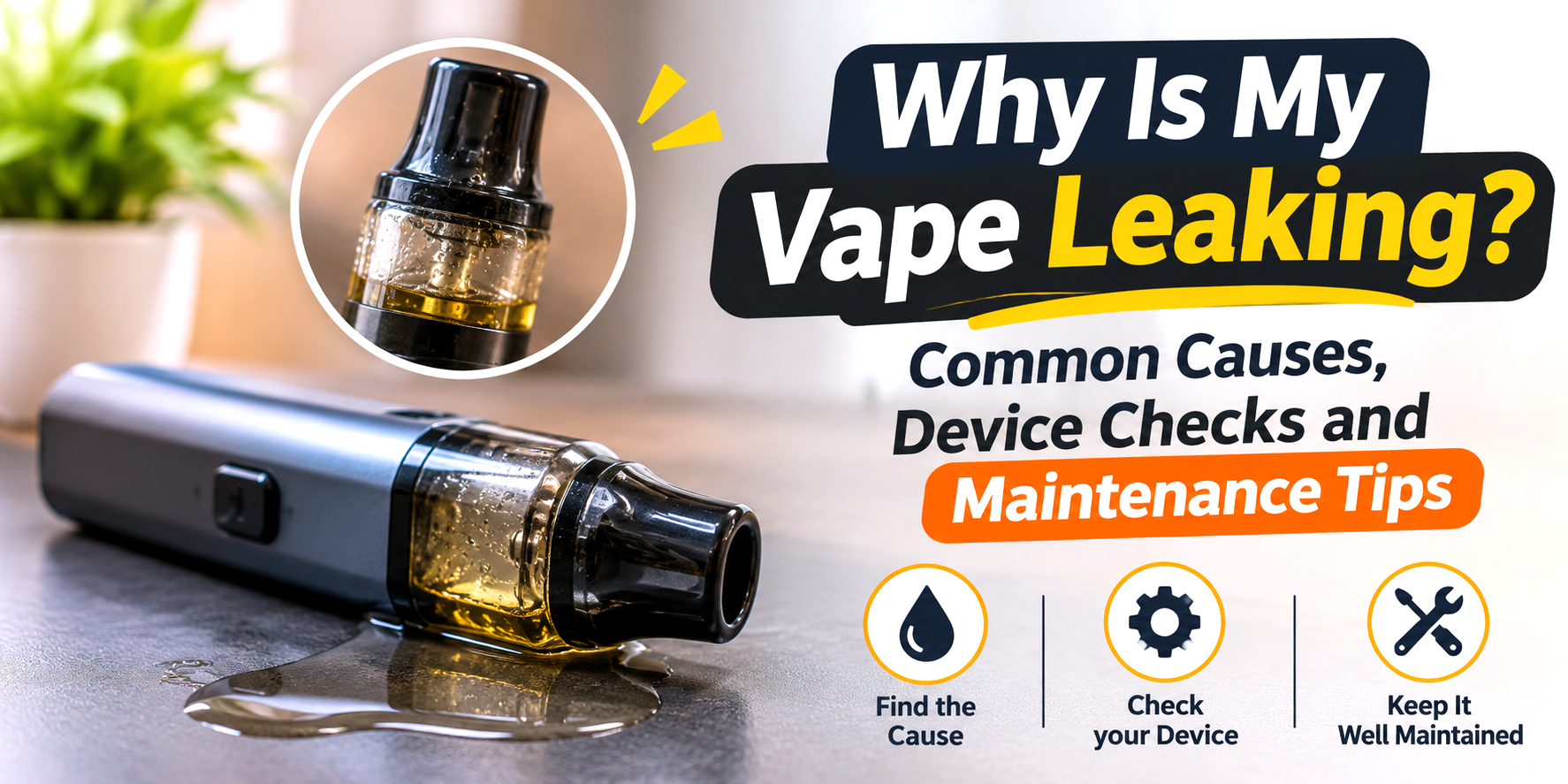
A leaking vape can create a mess, affect device performance and make regular use inconvenient. Sometimes, a small amount of liquid around the mouthpiece or airflow opening is caused by condensation. In other cases, the problem may involve an overfilled pod, a loose connection, worn seals or a damaged tank.
Understanding why a vape is leaking starts with identifying where the liquid is coming from. Leakage around the mouthpiece may have a different cause from liquid collecting near the airflow holes or at the bottom of a pod. The device type also matters because refillable pod systems, tank-based vapes and disposable devices have different designs.
Why Is My Vape Leaking?
A vape can leak when e-liquid escapes from the area designed to contain it. This may happen because of excess liquid, pressure changes, damaged seals or problems with the device's internal components.
Some common causes include:
- Overfilling a refillable pod or tank
- Loose or incorrectly fitted pod connections
- Condensation collecting around the mouthpiece
- Changes in temperature or air pressure
- Cracks in the pod or tank
- E-liquid entering the airflow channel
The location of the leak can provide a useful clue. Liquid around the mouthpiece may indicate condensation or excess liquid in the airflow path. Leakage from the bottom of a pod may point to a seal, connection or container problem.
Identifying the source is more useful than simply wiping away the liquid because the same leakage can return if the underlying cause remains.
Common Reasons Why a Vape Leaks
1. Overfilling the Vape Pod or Tank
Adding too much e-liquid is one of the common reasons a refillable vape may leak. Pods and tanks have a designated filling capacity. When they are filled beyond that capacity, liquid may enter the central airflow channel or escape through openings.
Overfilling can also leave very little space for air inside the container. Changes in pressure may then push liquid towards the mouthpiece or airflow openings.
To reduce this problem, avoid filling beyond the designated level. Allow enough space for the pod or tank's internal design to function as intended.
2. Vape Leaking From Airflow Openings
Vape leaking from airflow openings can be confusing because these areas are designed to allow air to move through the device, not release e-liquid.
This type of leakage can occur when excess liquid enters the airflow channel. It may also be related to a poorly fitted pod, damaged seals or liquid collecting inside the device.
Common signs include:
- Liquid collecting around the airflow holes
- Moisture appearing near the bottom of the device
- E-liquid reaching the outside of the pod
- Repeated leakage after the area has been wiped clean
A small amount of moisture may be condensation rather than a continuous leak. However, recurring liquid around the airflow openings should not be ignored.
3. Loose or Poorly Fitted Vape Pods
A pod needs to sit correctly in its designated position. If it is not fitted securely, gaps around the connection may allow liquid to escape.
This can happen when a pod is not seated properly, its locking mechanism is damaged or the connection area has become worn.
A loose pod may also affect the device's electrical contact, resulting in inconsistent performance. If the pod does not fit securely or shows visible damage, avoid continuing to use it.
4. Damaged Seals and Cracked Tanks
Seals help prevent e-liquid from escaping through the joints and openings of a vape. With regular handling and use, these small components can wear out or become damaged.
A damaged seal may cause liquid to collect around the bottom of a pod or near the tank connection. Cracks can also create small openings through which e-liquid gradually escapes.
Look for visible cracks, loose fittings or damaged rubber seals. Even a small opening can lead to repeated leakage, particularly when the device is moved or stored.
A cracked pod or tank should not continue to be used because the liquid may reach other parts of the device.
5. Temperature and Pressure Changes
Changes in temperature can affect the behaviour of e-liquid and the air inside a vape pod or tank.
For example, leaving a device in a hot vehicle or near a heat source can increase the likelihood of leakage. Temperature changes can also affect pressure inside the container, potentially pushing liquid towards the airflow channel.
Air pressure changes during travel may contribute to leakage in some tank-based devices as well.
Keeping a vape away from direct sunlight, excessive heat and extreme temperature changes can help reduce this risk.
6. Condensation Inside the Mouthpiece
Not every instance of liquid around a vape mouthpiece is caused by a leak. Condensation can form when warm vapour cools inside the mouthpiece or airflow channel.
This moisture may collect around the opening and resemble e-liquid leakage. It can also create a damp feeling around the mouthpiece.
Condensation is generally different from a continuous leak. If liquid keeps appearing after the area has been cleaned or collects around the bottom of the pod, there may be another cause.
Why Is My Vape Pod Leaking?
A leaking vape pod can have several causes because pod systems use compact containers, internal seals and small airflow channels.
The most common reasons include:
- Excess e-liquid: Filling a pod beyond its intended capacity can push liquid into the airflow channel.
- Damaged pod structure: A crack or worn seal can create an opening for liquid to escape.
- Poor connection: A pod that does not sit correctly may leave gaps around its connection point.
- Liquid buildup: Residue and condensation around the pod connection can collect over time and appear similar to a leak.
The location of the liquid can help distinguish between these possibilities. Moisture near the mouthpiece may be condensation, while liquid repeatedly appearing around the bottom of the pod may suggest a damaged seal or connection.
If a pod is cracked, leaking repeatedly or allowing liquid to reach the device's electrical components, stop using it.
How to Prevent Vape Leakage
Although not every leak can be prevented, a few simple habits can help reduce the chances of e-liquid escaping from a vape.
Avoid Overfilling
Leave the appropriate amount of space when filling a refillable pod or tank. Filling beyond its capacity can force liquid into the airflow channel and create leakage.
Keep the Device Upright
When practical, store a refillable vape in an upright position. Leaving certain devices on their sides for extended periods may allow liquid to collect near openings or seals.
Avoid Excessive Heat
Keep vapes away from direct sunlight, hot vehicles and other sources of excessive heat. Temperature changes can affect pressure inside a pod or tank and contribute to leakage.
Check Pods and Tanks for Damage
Look for cracks, loose fittings and worn seals. A damaged pod or tank can continue leaking even after the outside has been cleaned.
Keep the Mouthpiece and Connection Area Clean
E-liquid residue and condensation can collect around the mouthpiece and pod connection. Regularly wiping the exterior with a clean, dry cloth can help prevent buildup and make new leakage easier to identify.
Do not push sharp objects or tools into the airflow channel or electrical connections.
Use Compatible Components
Pods, coils and tanks are designed around particular device configurations. Using incompatible components can affect how the parts fit together and may contribute to leakage.
Vape Maintenance Tips for Better Device Care
Regular vape maintenance is not limited to cleaning visible liquid. Paying attention to the condition of the pod, tank, mouthpiece and exterior can help identify problems before they become more noticeable.
Clean the Exterior Regularly
Wipe away e-liquid residue from the outside of the device, mouthpiece and accessible connection areas. Use a clean, dry cloth and avoid allowing moisture to enter the battery or electronic sections.
Check for Liquid Buildup
Inspect the area around the pod connection and airflow openings. A small amount of condensation or residue can collect there during regular use.
Removing exterior buildup helps you recognise whether fresh liquid is appearing and where it is coming from.
Inspect the Pod and Tank
Check refillable containers for cracks, worn seals and loose connections. Pay attention to changes in how securely the pod fits into the device.
A damaged container should be replaced rather than repeatedly cleaned and reused.
Keep the Mouthpiece Clear
Residue can collect inside and around the mouthpiece. Keep the accessible exterior clean and avoid inserting objects into narrow internal passages.
Store the Vape Carefully
Avoid placing a vape loose inside a bag or pocket where it may be squeezed, dropped or exposed to excessive heat. Physical pressure can damage pods and tanks, while careless storage may cause liquid to escape through openings.
When Should You Stop Using a Leaking Vape?
A small amount of condensation around a mouthpiece is different from a device that continuously releases e-liquid.
Stop using a vape if:
- E-liquid repeatedly leaks from the pod or tank.
- The container has visible cracks or damaged seals.
- Liquid reaches the battery or electronic components.
- The device becomes unusually hot.
- The battery area appears swollen or damaged.
- The device produces unusual smells, smoke or other signs of electrical damage.
Do not attempt to open the device, repair its internal wiring or handle a damaged built-in battery. If e-liquid reaches electrical components, avoid charging the device. Keep damaged battery-powered products away from heat and follow appropriate disposal guidance.
Identifying a leak early can help prevent further damage and reduce unnecessary contact with leaked e-liquid.
Final Thoughts
A leaking vape can result from several factors, including overfilled pods, damaged seals, loose connections, temperature changes and condensation inside the airflow channel. The location of the liquid often provides the first clue about what may be causing the problem.
Regular cleaning, careful storage, checking pods for cracks and avoiding overfilling can help reduce common leakage problems. It is also useful to recognise the difference between minor condensation and recurring e-liquid leakage.
For consumers researching vape products and device care, Chillbazzar in Westminster, California, is a local retail reference. Knowing how different vape formats are constructed and what maintenance they require can help readers better understand the features.
FAQs
1. Why is my vape leaking from the bottom?
A vape leaking from the bottom may have a damaged seal, loose pod connection or crack in its tank. Liquid buildup around the connection area can also contribute to the problem. Check for visible damage and stop using a pod or tank that does not contain e-liquid properly.
2. Why is my vape leaking from the airflow holes?
Vape leakage from airflow holes can happen when excess e-liquid enters the airflow channel. Overfilling, damaged seals and poorly fitted pods are possible causes. Repeated leakage may indicate a problem with the pod or tank rather than simple condensation.
3. Why does my vape pod keep leaking after cleaning?
Cleaning removes existing residue, but it does not fix a cracked pod, worn seal or loose connection. If fresh liquid continues to appear after the exterior has been wiped, inspect the pod for visible damage and discontinue use if it cannot contain the liquid.
4. How can I prevent vape leakage?
Avoid overfilling refillable pods, store the device carefully, keep it away from excessive heat and check containers for cracks or worn seals. Regularly cleaning the exterior and connection area can also help identify leakage early.
5. Is condensation inside a vape the same as a leak?
No. Condensation forms when vapour cools and moisture collects inside the mouthpiece or airflow channel. A leak involves e-liquid escaping from the pod or tank. Repeated liquid buildup, especially around the bottom of a pod, may indicate a separate problem.